

Content

Balance Sheet has some fictitious assets, which have no market value. Such items are unnecessarily inflate the total value of assets. That is, only those assets are recorded in it which can be expressed in money.
What are three limitations of financial statements?
- Financial Statements Do Not Contain Some Intangible Assets.
- Financial Statements Only Cover a Specific Period of Time.
- Financial Statements May Not Be Comparable.
- Financial Statements Could be Wrong Due to Fraud.
- Financial Statements Do Not Cover Non-Financial Issues.
Balance Sheet is the last and the most important link in the chain of Final Accounts and Statements. It describes the financial position of a business in a systematic standard form. It is prepared with a view to measure the exact financial position of the business on a certain fixed date.
Limitations of Balance Sheet
A Balance Sheet exhibits the true financial position of a firm at a particular balance sheet definition date. However, Balance Sheet is a summary of whole of the accounting record.
Understand what a balance sheet is, learn what a balance sheet shows, examine its format, and see an example of a balance sheet. Explain how you can determine the level of debt and risk a company has by looking only at the balance sheet.
BUS202: Principles of Finance
Apple’s total liabilities increased, total equity decreased, and the combination of the two reconcile to the company’s total assets. Although the balance sheet is an invaluable piece of information for investors and analysts, there are some drawbacks. For this reason, a balance alone may not paint the full picture of a company’s financial health. Balance SheetA balance sheet is one of the financial statements of a company that presents the shareholders’ equity, liabilities, and assets of the company at a specific point in time.
- When ratio analysis is used with knowledge and not mechanically , it can be a very valuable tool for financial analysis for the business owner.
- Analysts can catch these if the company’s performance exceeds the industry norms.
- This shows the changes in equity within a business for a specific reporting period.
Therefore, if the inflation is very high, the items in the reports will be recorded at lower costs and hence, not give much information to the readers. Many assets which are internally generated are not recorded and reported in the balance sheet which limits the pure projection of entity’s capability to generate cash and cash equivalents.
Limitations of the Balance Sheet
Assets not expected to be liquidated or used up within one year or one operating cycle of the business, whichever is greater, are classified as non-current assets. Very large companies may be composed of different divisions manufacturing different products or offering different services. Different industry averages need to be used for each different division to make ratio analysis mean something. The ratio analysis, used in this way, will certainly be more accurate than if you tried to do a ratio analysis for this type of large company. Knowing the limitations that come with financial ratios can help you better understand them.
- Each category consists of several smaller accounts that break down the specifics of a company’s finances.
- The AnalystPrep videos were better than any of the others that I searched through on YouTube for providing a clear explanation of some concepts, such as Portfolio theory, CAPM, and Arbitrage Pricing theory.
- For example to conduct ratio analysis you need figures from other financial statements as well.
- Inflation can also affect the value of assets and is not taken into account under GAAP.
- By comparing your income statement to your balance sheet, you can measure how efficiently your business uses its assets.
In other words, it shows you how much cash you have readily available. It’s wise to have a buffer between your current assets and liabilities to cover your short-term financial obligations. There are other financial analysis techniques besides ratio analysis to determine the financial health of a company. These techniques fill in the gaps left by the limitations of ratio analysis, which are discussed below.
Limitations of Using Financial Ratio Analysis
Some liabilities are considered off the balance sheet, meaning they do not appear on the balance sheet. Earned and unearned premiums is similar to prepayments in that a company has received money upfront, has not yet executed on their portion of an agreement, and must return unearned cash if they fail to execute.
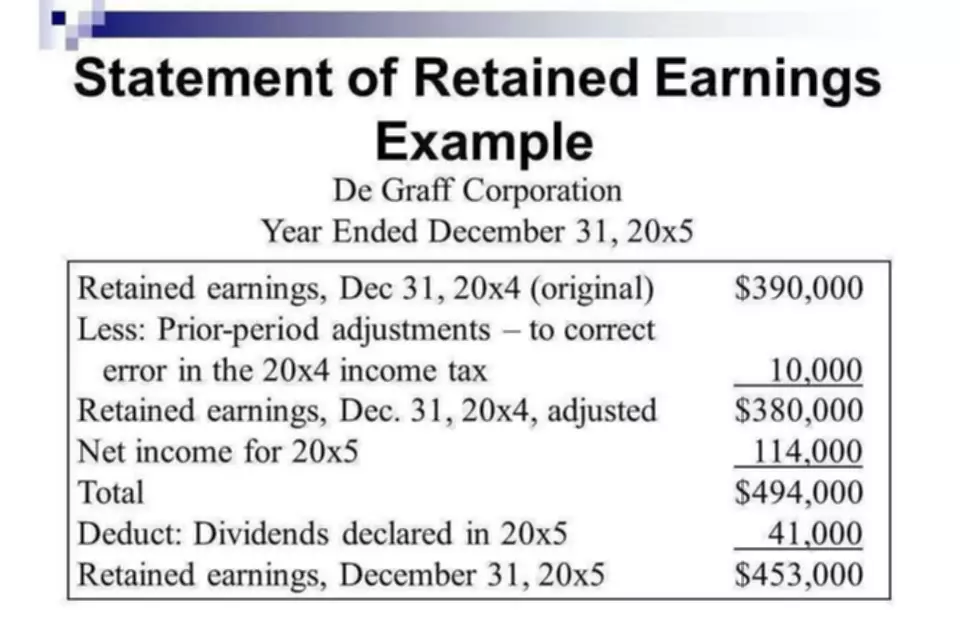
Equity appears on the balance sheet, one of the four primary financial statements. In accounting and finance, equity is the residual claim or interest of the most junior class of investors in assets, after all liabilities are paid. However, if the company has incurred intangible assets, it is recorded on the financial statements.